

Throwing Pennies at the Bridges Down Below (an Astral Weeks blog)
Thursday, April 24, 2014
And we don't care about the young folks


Tuesday, April 22, 2014
Wildly iconic
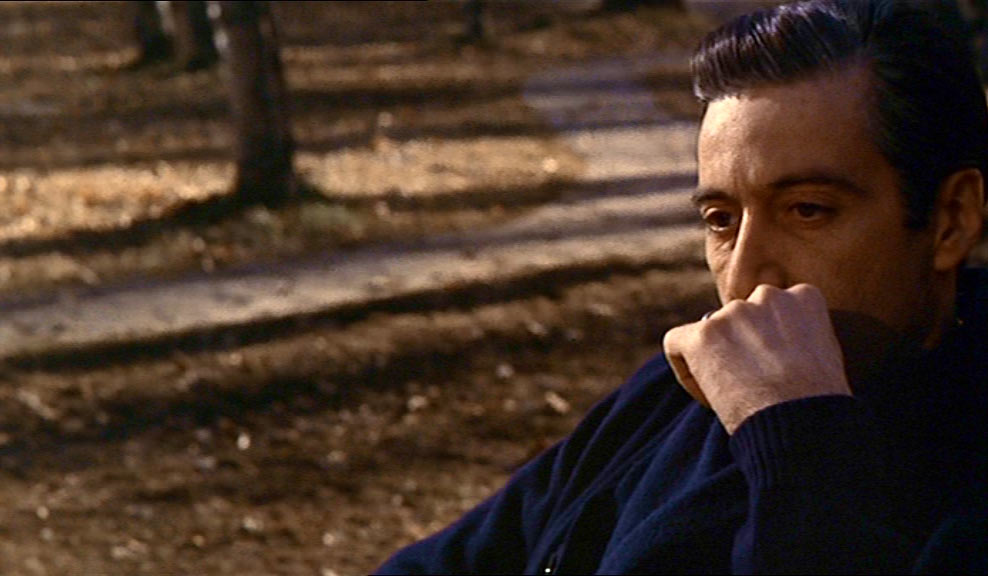
I spun Love's Forever Changes the other night and as "The Red Telephone" played, I had visions of Arthur Lee striking his best Michael-Corleone-at-the-end-of-The Godfather: Part II pose—plunked in a chair, hand to mouth, all withdrawn and brooding and menacingly handsome. Looking wildly iconic and shit.
Of course, there's more to Love's masterstroke than men transforming themselves into icons (all while firmly preserving what makes them human). Released in November of 1967, Forever Changes was issued during a period when the album was becoming the preferred creative medium for artists. But like a certain LP regularly picked apart here in our tiny corner of the Internet, Forever Changes forced listening audiences to reconsider how albums were composed. How should you immerse yourself in an artist's long-player, when you know that it will all end swiftly and pitilessly? Love's response to this question was to communicate something new and vital: albums are not about beginnings and ends. They're about journeys—paths chosen, emotions experienced, knowledge gained, connections established, hatreds cultivated, new loves forged, time beautifully spent.
Forever Changes and Astral Weeks are heavily infused with movement; every word and note conveys a sense of action. Listening to either album, my heart flutters, the soles of my feet vibrate—I feel like I'm in a rapidly speeding train, the scenery outside the window an opaque blur of color. Where I am going is inconsequential—that I am moving is what matters.
Wednesday, April 16, 2014
Fair play
Stereogum dives headfirst into the Van Morrison oeuvre and nearly drowns. After wringing out their hair and wrapping themselves in towels, the writers rank Morrison's 30-plus albums from worst to best. Not surprisingly, Astral Weeks failed to claim the top spot. You know why. These music-list exercises, so ubiquitous in today's world of dead-on-arrival music criticism, resonate with added irrelevance whenever the sorely obvious choice as No. 1 is crowned as such. See for yourself which album is considered the pinnacle of Morrison's career.
Monday, April 14, 2014
Punctuation

Wednesday, April 9, 2014
The first principle of artistic economy

Communication, however, brought further difficulties, which it was his special triumph to overcome. If "his destiny was to be elusive of social or religious orders," it was because he reserved his energies for order of another kind. "The first principle of artistic economy," he had found, was isolation; he had detached himself from his nationality and his religion; but he found his medium, language, pointing back to them.Van Morrison achieved a similar discovery, only his pathways were fraught with dissimilar hurdles and hindrances. However, at this moment, I'd rather not highlight the manner in which Morrison's emotional and physical isolation made Astral Weeks tremble and throb, but instead, why the album demands near-identical shades of isolation from listeners. Because when I hit play or drop the needle, I typically do so while sealed off from others. A particular sort of solitary confinement is necessary to truly appreciate Astral Weeks' labyrinthine journey into the heart of what sustains us, what moves us, what remains with us, and, perhaps most important of all, what leaves us feeling incomplete and defeated. In short, it's this: the artist being alone to make music to be alone to.
Friday, April 4, 2014
Tick all the boxes
If I had a tick-list of things to look for in the perfect "Astral Weeks" cover, this rendition would tick all the boxes: viaduct pronounced as "via-DOCK"; a teeny bit of falsetto; a guitarist ditching their pick mid-song; a guitarist getting all giggly mid-song; a lyrical brainfart; raucous foot stomping; a sung word that may or may not have been profanity; an artist who loses the plot entirely, comes back to their senses, then teeters on the edge of madness once more; a young person whose from-the-very-depths-of-their-soul performance makes it clear they simply can't exist without Astral Weeks.
Sunday, March 30, 2014
Back in Richard Davis' room
Richard Davis' CV is damn impressive. Seriously; check it out. One could compile an all-legend lineup of the men he recorded with: Dizzy Gillespie, trumpet; Eric Dolphy, saxophone; Elvin Jones, drummer; Charles Mingus, composer. You would give up 10 years of your life to hear this bunch in a live setting. Don't try and deny it. Davis also did recording work with a number of other highly influential jazz artists, including saxophonist Booker Ervin, pianist Andrew Hill, and trumpeter Freddie Hubbard.
And so here's the thing: finding an entry point for Davis' career can be challenging. Where do you begin? His resume is littered with classics, each one begging you to give it a whirl. Friday, during my lunch break, I chose Dolphy's Out to Lunch!, for no other reason than it has luscious blue cover art. (It's also regarded as a masterpiece of the free jazz sub-genre. So it looks good and sounds good.)
On Out to Lunch!'s title track, Davis exhibits a puerile recklessness that you don't hear on Astral Weeks. One snippet of his bass solo reminds me of the classic tip-toeing cartoon character: quick and exaggerated steps, balanced on their toes, an index finger placed over the lips. But just as quickly as that image forms, it vanishes. Davis' notes then fall and tumble and bump into one another, like a child spilling a bucketful of blocks across the floor. Then my favorite part: the bassist plays the same notes over and over, almost as if he's gleefully mocking himself. Now we're having some fun.

Subscribe to:
Posts (Atom)